Boltbus: Routes, Tickets, Schedules & Service Updates 2026
BoltBus was a Greyhound-owned intercity bus service that operated from 2008 to 2021, known for its “Bolt for a Buck” $1 fares, free Wi-Fi, and extra legroom. The brand discontinued operations on July 1, 2021, and its former routes are now served by FlixBus, following FlixMobility’s acquisition of Greyhound in 2021.
What Was BoltBus?
BoltBus was an intercity bus brand launched in March 2008 by Greyhound Lines and Peter Pan Bus Lines to compete with low-cost Chinatown bus operators in the Northeast. It offered curbside pickups, reserved seating, and modern amenities like Wi-Fi at fares that undercut Amtrak and traditional bus lines.
Greyhound and Peter Pan operated the service jointly until September 2017, when Greyhound became the sole owner. BoltBus expanded well beyond its original East Coast footprint, eventually adding Pacific Northwest routes (2012) and a short-lived California network connecting Los Angeles, San Francisco, San Diego, and Las Vegas (2013–2017 era).
Is BoltBus Still Running in 2026?
No. BoltBus discontinued operations on July 1, 2021, after suspending service in March 2020 due to the pandemic. Greyhound, its parent company, chose not to relaunch the brand. In September 2021, FlixMobility acquired Greyhound outright, and former BoltBus routes are now largely covered by FlixBus.
If you’re trying to find a “BoltBus schedule today,” you won’t find one the brand’s booking system, phone line, and route network have been folded into FlixBus. Travelers should search directly on flixbus.com or the FlixBus app for current departures on former BoltBus corridors.
What Was the BoltBus Route Network Like?
BoltBus operated 121 routes connecting 9 cities across 12 stations, running roughly 140 daily trips at its peak, according to Wanderu’s carrier data. Its network spanned two distinct regions: the Northeast corridor and the Pacific Northwest, plus a shorter-lived California expansion.
Northeast destinations:
| City | Stop/Station |
| New York City | Curbside (Midtown Manhattan) |
| Washington, D.C. | Union Station |
| Baltimore | Penn Station |
| Greenbelt, MD | Greenbelt Metro Station |
| Philadelphia | 30th Street Station |
| Newark, NJ | Newark Penn Station |
| Boston | South Station Bus Terminal |
| Cherry Hill, NJ | Cherry Hill Mall |
| New Haven, CT | Curbside |
Pacific Northwest destinations: Seattle, Portland, Tacoma, Everett, Bellingham, Vancouver (B.C.), plus Albany and Eugene, Oregon.
What Was BoltBus NYC Service Like?
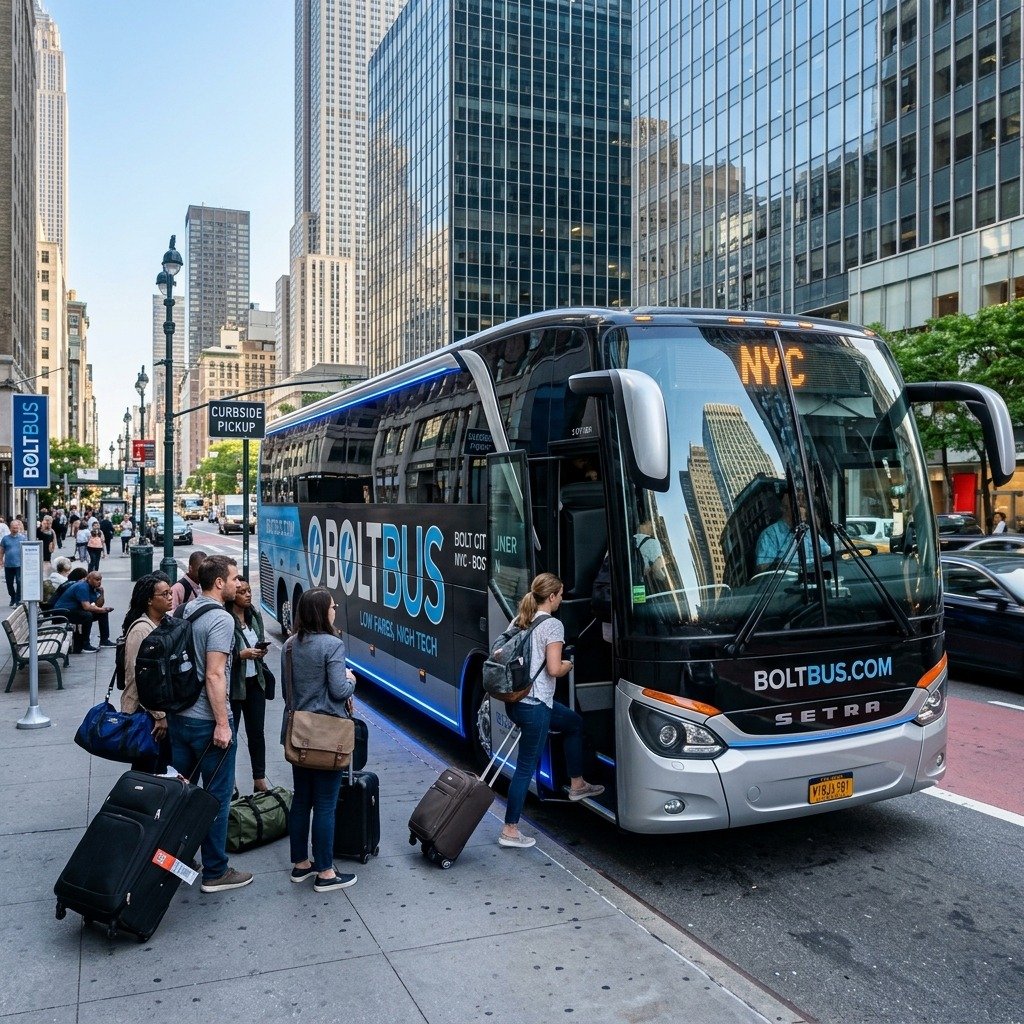
BoltBus NYC service connected Midtown Manhattan with Boston, Washington D.C., Philadelphia, and other Northeast cities via curbside boarding rather than a traditional terminal. New York functioned as the brand’s busiest hub, launching in March 2008 as BoltBus’s very first route (NYC–D.C.).
Because BoltBus used curbside stops instead of indoor terminals, boarding locations sometimes shifted due to city permitting and traffic patterns. A 2011 industry report even flagged curbside bus operators, including BoltBus and Megabus, as facing more oversight concerns than terminal-based carriers. Riders today looking for direct New York bus service to these same cities should check FlixBus, which also uses a mix of curbside and terminal stops.
Where Did Bolt Bus Greenbelt to NYC Service Stop?
BoltBus added a stop at the Greenbelt Metro Station in Greenbelt, Maryland, in 2009, giving Washington-area riders a convenient park-and-ride option on the New York City route without needing to travel into downtown D.C. This stop connected directly to the NYC–D.C. corridor, one of BoltBus’s original 2008 launch routes.
The Greenbelt stop was popular with commuters and students in Prince George’s County who could access Metro’s Green Line rather than fighting downtown traffic. Since BoltBus’s 2021 shutdown, this specific stop is no longer served under the BoltBus name. Travelers from the Greenbelt area should check FlixBus’s D.C.-area stops or Greyhound’s current Maryland routes for a comparable alternative.
How Did BoltBus Tickets Work?
BoltBus tickets were sold exclusively online or through the mobile app, with at least one seat per bus offered for $1 under the “Bolt for a Buck” promotion. Every ticket guaranteed a reserved seat, tickets were non-refundable, and passengers needed no printed copy or ID to board just an emailed e-ticket.
Key details on how BoltBus ticketing worked:
- Refunds: Not offered. Missing your bus meant buying a new ticket.
- Changes: Allowed if made more than 24 hours before departure, through the website’s “Reschedule a Reservation” option.
- Will call: Not available everything was booked online in advance.
- Boarding groups: Passengers were assigned to groups S, A, B, or C, with special-needs passengers and loyalty members boarding earlier.
- ID requirement: None, though a government ID was always recommended.
Since the brand is discontinued, these policies are historical. Anyone booking on a former BoltBus route today will be working under FlixBus’s current ticketing terms, which travelers should confirm directly on flixbus.com before purchasing.
What Amenities Did BoltBus Buses Offer?
BoltBus buses included free Wi-Fi, individual power outlets, extra legroom, on-board restrooms, and an entertainment system with movies, alongside leather reclining seats. The fleet used Prevost X3-45 and MCI D4505 coaches with five fewer seats than standard buses to create more legroom per row.
| Amenity | Included? |
| Wi-Fi | Yes, free |
| Power outlets | Yes, 120V per seat pair |
| Restroom | Yes, on every bus |
| Extra legroom | Yes (~3 extra inches) |
| Movies/entertainment | Yes |
| Meals/beverages | No BYO snacks allowed |
| Pets | No, except ADA service animals |
How Did BoltBus Compare to Megabus and FlixBus?
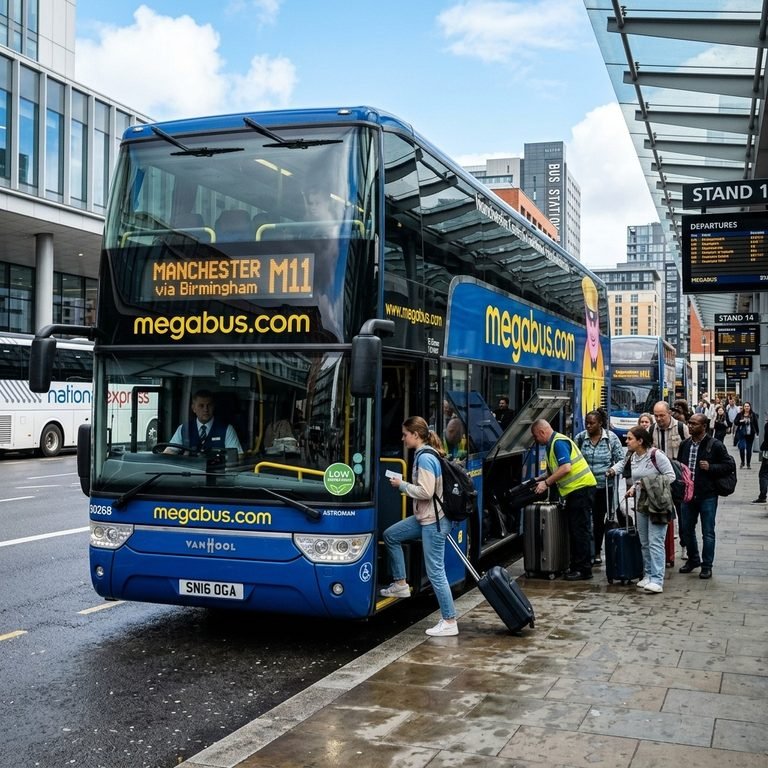
BoltBus, Megabus, and FlixBus all used a low-cost, tech-forward booking model, but differed in fleet size and coverage. BoltBus focused narrowly on the Northeast and Pacific Northwest; Megabus built a broader national network; FlixBus, now the successor brand for former Greyhound and BoltBus routes, covers over 8,000 destinations across 40-plus countries.
| Factor | BoltBus (historical) | Megabus | FlixBus (current) |
| Status | Discontinued (2021) | Active | Active |
| Coverage | Northeast, Pacific NW | Nationwide (limited) | Nationwide + international |
| Booking | Website/app only | Website/app | Website/app |
| Wi-Fi | Free | Varies | Free |
| Best for | (Formerly) short regional hops | Budget nationwide travel | Broadest current route network |
Why Did BoltBus Matter to Intercity Bus Travel?
BoltBus proved that budget bus travel didn’t have to mean sacrificing comfort, introducing free Wi-Fi, power outlets, and reserved leather seating to a segment previously associated with Chinatown bus operators. Its tech-forward booking model and $1 fare promotions pressured competitors to modernize.
Its curbside model also drew scrutiny a 2011 report cited by Wikipedia flagged safety concerns tied to curbside-boarding carriers generally, though this applied to the sector broadly rather than BoltBus specifically. Passenger reviews collected by Wanderu (898 reviews, averaging 4.0/5) noted frequent praise for value and cleanliness alongside occasional complaints about delays and inconsistent Wi-Fi common friction points across the budget bus industry.
Frequently Asked Questions
Is BoltBus the same company as FlixBus?
No. BoltBus was a Greyhound brand that shut down in 2021. FlixMobility acquired Greyhound in September 2021 and now operates former BoltBus routes under the FlixBus name.
Can I still use an old BoltBus ticket or credit?
BoltBus stopped operating in July 2021, so tickets purchased under that brand are no longer valid. Contact Greyhound or FlixBus customer service directly if you’re holding unused credit.
Did BoltBus ever serve Chicago or the Midwest?
No. BoltBus’s network was limited to the Northeast corridor and Pacific Northwest, with a temporary California expansion; it never operated Midwest routes.
What was the cheapest BoltBus fare ever offered?
BoltBus’s signature promotion, “Bolt for a Buck,” guaranteed at least one $1 seat per bus (excluding handling charges), a marketing strategy dating back to its 2008 launch.
Why did BoltBus’s logo attract controversy?
BoltBus’s thunderbolt logo resembled one used by the British Union of Fascists in the 1930s. The company stated the resemblance was coincidental and kept the design throughout its operation.
Did BoltBus require printed tickets?
No. BoltBus used e-tickets sent by email, which passengers showed on a smartphone to the driver no printing was required.
Could children travel alone on BoltBus?
No. Children under 16 could not travel unaccompanied on BoltBus. Kids under 2 rode free on a parent’s lap; children 2 and older required a full-price ticket.
What happened to BoltBus’s Greenbelt, Maryland stop?
The Greenbelt Metro Station stop, added in 2009 on the NYC–D.C. route, is no longer served under the BoltBus brand. Travelers should check FlixBus or Greyhound for current D.C.-area service.
Were BoltBus tickets ever refundable?
No. BoltBus tickets were strictly non-refundable at all times; missing a departure meant purchasing a new ticket rather than receiving a refund or automatic rebooking.
Which company operates the former BoltBus fleet or routes today?
FlixBus operates most former BoltBus corridors following FlixMobility’s 2021 acquisition of Greyhound. Some vehicles and routes may also fall under Greyhound’s own current network.