Septa bus: Routes, Fares, Schedules & Tracker 2026
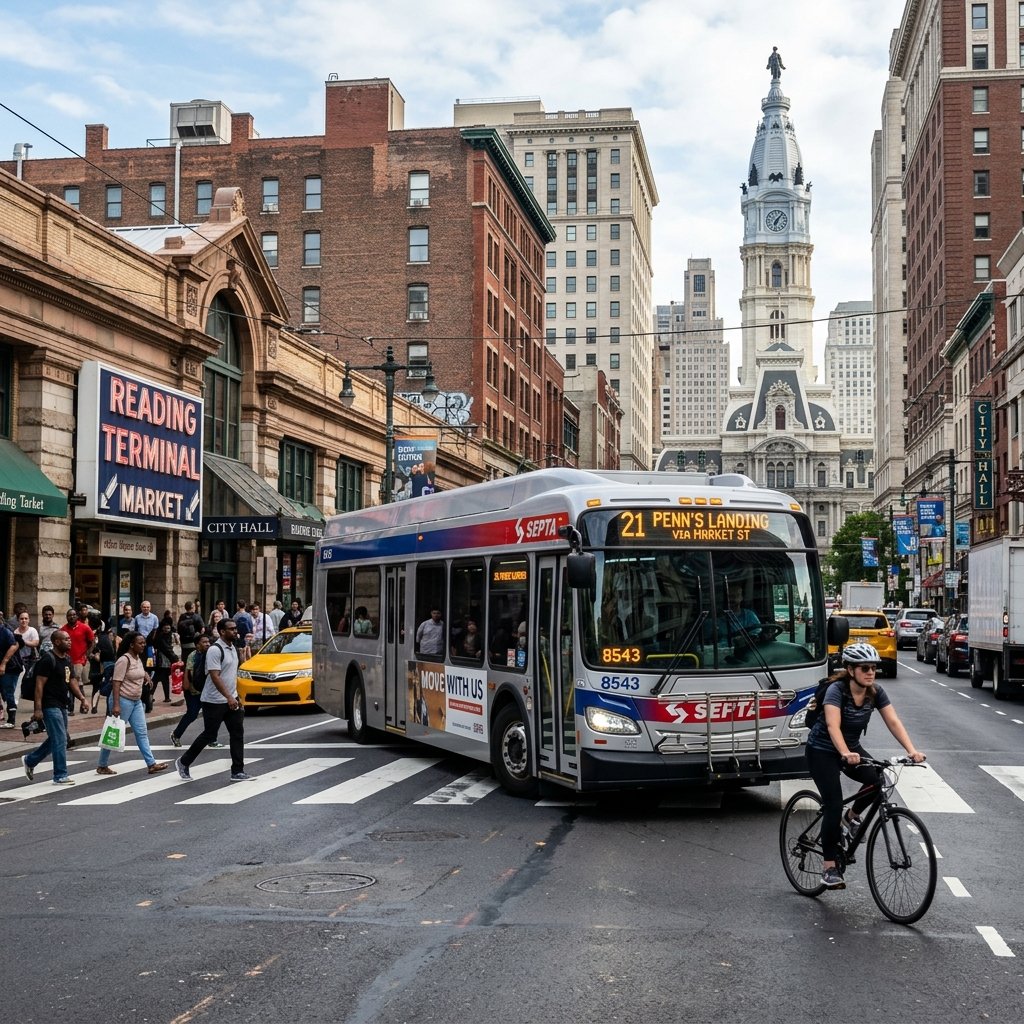
SEPTA operates bus service across Philadelphia, Bucks, Chester, Delaware, and Montgomery counties, with over 100 routes connecting to Metro and Regional Rail. The base fare is $2.90 per trip with up to two free transfers within 2 hours. SEPTA’s New Bus Network overhaul, launched August 2026, added frequent routes and reworked dozens of lines for faster, more reliable service.
Getting around Philadelphia without a car usually means riding a SEPTA bus at some point. Whether you’re commuting to Center City, connecting to the Market-Frankford Line, or just trying to find the closest stop, SEPTA’s bus network is the backbone of everyday travel across the region.
What Is SEPTA Bus and Where Does It Operate?
SEPTA (Southeastern Pennsylvania Transportation Authority) operates bus service across Philadelphia, Bucks, Chester, Delaware, and Montgomery counties. The network includes more than 100 numbered and lettered routes, connecting neighborhoods to SEPTA Metro lines, Regional Rail stations, and job centers throughout the region.
SEPTA buses complement the Metro system, which includes the Market-Frankford Line (L), Broad Street Line (B), Subway-Surface Trolleys (T), Route 15 Trolley (G), Media-Sharon Hill Line (D), and Norristown High Speed Line (M). Many bus routes are designed specifically to feed into these Metro stations, making multi-leg trips possible on a single fare with free transfers.
What SEPTA Bus Routes Are Available?
SEPTA’s bus routes are numbered 1 through roughly 495, plus a handful of lettered routes (like Route K) and specialty services such as the LUCY Loop and Direct Bus (FXCB). Routes are grouped by frequency, with “Frequent” routes offering service every 15 minutes or better throughout the day.
Confirmed Frequent Bus routes, per SEPTA’s official schedule page, include:
| Frequent Routes |
| 3, 6, 17, 18, 21, 23, 33, 45, 46, 47, 48, 51, 52, 56, 58, 60, 63, 66, 70, 79, 82, 108, 113 |
These routes typically serve high-ridership corridors and major employment or transit hubs. For example, Route 45 now runs to the Navy Yard seven days a week, and Route 79 was extended to reach the 40th Street Station on the Market-Frankford Line.
.How Do I Find SEPTA Bus Routes Near Me?
The fastest way to find SEPTA bus routes near you is through the SEPTA App or SEPTA.org’s Trip Planner, both of which use your location to show nearby stops, real-time arrivals, and route options. Google Maps, Apple Maps, and the Transit app also display current SEPTA bus data.
Practical ways to locate routes near your address:
- SEPTA App: Shows nearby stops, live vehicle tracking, and lets you manage your SEPTA Key Card from your phone.
- Real-Time System Map (septa.org/realtime-map): Search by route number to see live trip details and skipped stops.
- Trip Planner: Enter a start and end location to get step-by-step directions, including transfers.
- New Bus Network Trip Planner (nbn-plan.septa.org): Useful if you want to preview how your regular route has changed post-redesign.
A word of caution: if you’re used to catching a bus at a specific corner, double-check it’s still an active stop. Several routes including 35, 47M, 62, 78, 80, 89, and 106 were discontinued in Phase 1 of the New Bus Network, and stops along those corridors may no longer be served.
How Do I Read SEPTA Bus Schedules?
SEPTA bus schedules are available by route number on septa.org/schedules, showing timetables for weekdays, Saturdays, and Sundays separately. Each schedule lists scheduled departure times at key stops along the route, plus notes on frequency, direction, and any seasonal or holiday variations.
To find a schedule:
- Go to septa.org/schedules and search by route number or name.
- Select your direction of travel (inbound or outbound).
- Choose the correct day type weekday, Saturday, or Sunday/holiday schedules can differ substantially.
- Check for posted service alerts, since detours or temporary changes aren’t always reflected in the printed timetable.
Because SEPTA has been phasing in the New Bus Network across 2026 and 2027, it’s worth confirming your route’s schedule even if you’ve ridden it before. Phase 2 changes are expected in February 2027, and Phase 3 in June 2027, so more adjustments are coming.
What Does SEPTA Bus Fare Cost?
The current SEPTA base fare for bus and Metro trips is $2.90 per ride, regardless of payment method cash, SEPTA Key card, or contactless credit/debit/mobile payment. Riders using a SEPTA Key card or contactless payment get up to two free transfers within a 2-hour window; cash-paying riders do not receive free transfers.
| Payment Method | Fare | Free Transfers |
| Cash | $2.90 | None |
| SEPTA Key Card | $2.90 | Up to 2 (within 2 hours) |
| Contactless (credit/debit/mobile) | $2.90 | Up to 2 (within 2 hours) |
For frequent riders, SEPTA offers passes that can lower the effective per-trip cost:
| Pass | Price | Details |
| One Day Convenience Pass | $7.50 | Up to 8 trips, bus/Metro only |
| Three Day Convenience Pass | $19.00 | Up to 24 trips, bus/Metro only |
| Weekly TransPass+ | $31.00 | Up to 56 trips, includes weekend Regional Rail travel |
| Monthly TransPass+ | $116.00 | Up to 240 trips, includes weekend Regional Rail travel |
Certain riders qualify for reduced or free fares: children under 12 ride free with a fare-paying adult, seniors 65+ ride free with a Senior Fare Card, and riders with disabilities are eligible for half fare with a Reduced Fare Card. Because pass pricing and eligibility rules can change, confirm current details directly with SEPTA before budgeting for a monthly pass.
How Do I Pay for a SEPTA Bus Ride?
Riders can pay using a SEPTA Key card, contactless credit/debit card, mobile wallet (Apple Pay, Google Pay, Samsung Pay), or exact cash fare on board. Note that cash payments require exact change and do not include free transfers, making SEPTA Key or contactless the more economical option for multi-leg trips.
A SEPTA Key card costs $4.95 to purchase, but that fee is refunded to your Travel Wallet if you register the card at septakey.org within 30 days. Registering also protects your balance if the card is lost or stolen, and enables a multi-rider feature that lets up to five people travel on one card.
What Changed With SEPTA’s New Bus Network?
SEPTA’s New Bus Network is the first comprehensive redesign of its bus system in 63 years, with Phase 1 taking effect August 23–24, 2026. It added two new routes (72 and 76), extended six others, discontinued seven low-ridership routes, and improved frequency on several key lines.
Highlights of Phase 1:
- New Route 72: Connects Frankford Transit Center and Cedarbrook Plaza via Cheltenham Avenue, every 30 minutes.
- New Route 76: Connects North and South Philadelphia via Columbus Boulevard, Frankford Avenue, and G Street, every 30 minutes.
- Extended routes: 45 (now serves the Navy Yard 7 days a week), 53, 60, 61, 79, and 105.
- Discontinued routes: 35, 47M, 62, 78, 80, 89, and 106, with suggested alternate routes posted on SEPTA’s site.
- Frequency improvements: Routes 6, 46, 47, 49, 57, and 64 all received more frequent service.
According to SEPTA, once fully implemented across all three phases, the number of “frequent” routes (arriving every 15 minutes or better, seven days a week) will grow from 8 to 29. Phase 2 is scheduled for February 2027 and Phase 3 for June 2027, so riders in outlying counties should watch for additional changes.
How Do SEPTA Buses Connect With Other Transit Options?
SEPTA buses are designed to feed directly into the Metro and Regional Rail systems, with many routes terminating at transit centers like Frankford Transit Center, Fern Rock Transit Center, and Wissahickon Transit Center. Riders using a SEPTA Key card or contactless payment can transfer between bus and Metro for free within a 2-hour window.
Three stations also offer free interchange between Metro lines without needing to pass through a faregate again: 15th St/City Hall, 13th Street, and Drexel Station at 30th Street. Note that transfers to or from Regional Rail are not included in the base bus/Metro fare and require an additional payment.
Frequently Asked Questions
Is SEPTA bus fare the same as Metro fare?
Yes. Both SEPTA bus and Metro (subway, elevated train, and trolley) trips cost $2.90 per ride, and free transfers between the two modes are included when paying with a SEPTA Key card or contactless payment.
Can I use my SEPTA Key card on more than one bus route in a single trip?
Yes, as long as your total transfers stay within two and occur within a 2-hour window from your first tap, using the same SEPTA Key card or contactless card for the entire trip.
Do SEPTA buses accept dollar bills or only exact change?
SEPTA buses accept cash, but exact fare is required drivers cannot make change, so bring $2.90 in exact coins or bills if paying by cash.
What happens if my regular bus route was discontinued in the New Bus Network changes?
SEPTA has published suggested alternate routes for every discontinued line (such as 35, 62, 78, 80, 89, and 106) on its New Bus Network Phase 1 webpage; check there or use the Trip Planner for updated directions.
Are SEPTA buses wheelchair accessible?
SEPTA buses and fare kiosks are ADA accessible, and kiosks include Braille labeling, audio instructions, and jacks for audio amplification equipment to support riders with disabilities.
How long is a SEPTA Key card valid for?
A SEPTA Key card is valid for up to four years from its purchase date, shown as a month/year printed on the card; passes and Travel Wallet funds cannot be loaded after that expiration date.
Do children ride SEPTA buses for free?
Children under 12 ride free on SEPTA buses when accompanied by a fare-paying adult, including adults using senior or reduced fare cards.
Can I plan a SEPTA bus trip using Google Maps?
Yes, Google Maps, Apple Maps, and the Transit app all incorporate SEPTA’s official bus and Metro schedule data, though SEPTA recommends confirming trip details on its own Trip Planner during periods of active route changes.
Is there a fee to replace a lost SEPTA Key card?
If your registered SEPTA Key card is lost or stolen, your Travel Wallet funds and passes are temporarily protected; report it at septakey.org or by phone, and a replacement can be issued, though unregistered cards are not eligible for fund protection.
Will more SEPTA bus routes change after Phase 1?
Yes. SEPTA has scheduled Phase 2 of the New Bus Network for February 2027 and Phase 3 for June 2027, which will bring further route alignment changes, new SEPTA Go service, and additional route eliminations in outlying counties.